

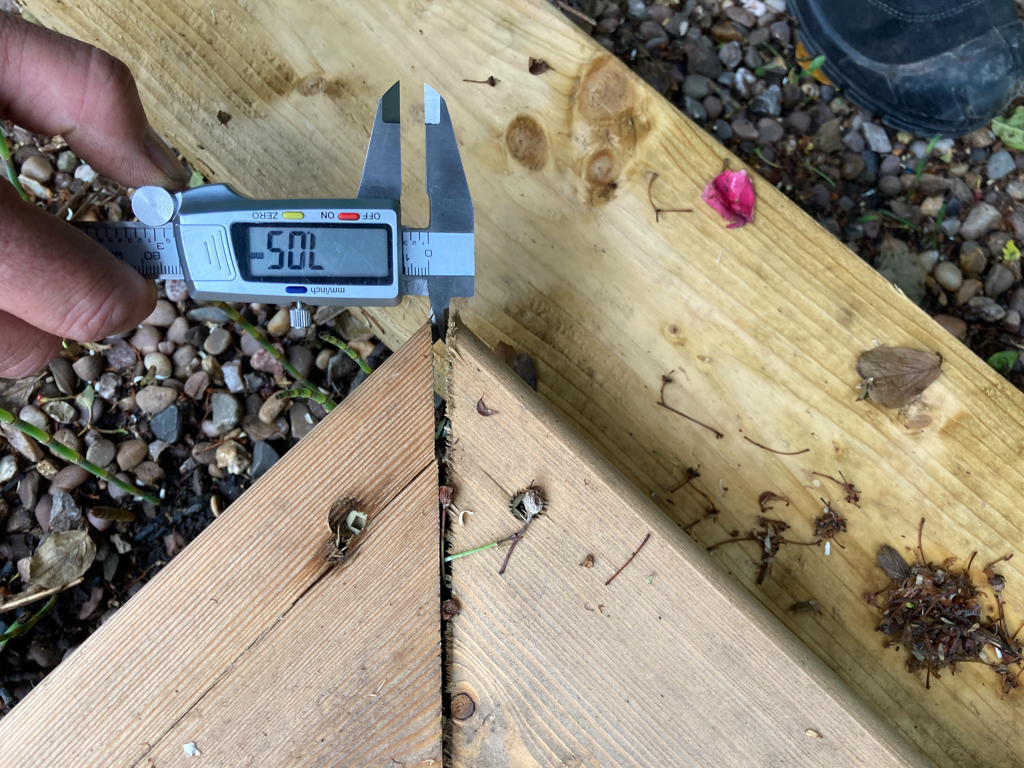
A garden or driveway dispute rarely starts in a courtroom. It usually starts with a sinking feeling: standing on a new terrace that already holds water, driving up a new driveway that scrapes the car, or watching a recently built wall crack and lean.
Homeowners see the immediate problem. Solicitors see a potential claim. The court, if it ever becomes involved, sees a bundle of papers. Somewhere between those three views, landscape expert evidence provides the bridge.
This post sets out how independent landscape expert evidence fits into the legal process, from the first complaint to a final hearing.
“Note: Nothing here is legal advice. It simply explains how expert evidence usually supports the work of solicitors and the court”.
When does a landscape expert usually get involved?
Experts can add value at several stages of a dispute. The earlier you involve a suitable expert, the clearer the technical issues become.
Pre-action stage
At the earliest stage, a homeowner or contractor may approach an expert directly, or their solicitor may do so. The aim is simple:
- understand what has gone wrong;
- identify whether the issues are design-related, workmanship-related, or both;
- obtain a realistic sense of likely remedial costs.
At this point the expert often prepares a private advisory report or note, rather than a full CPR Part 35 report. That advice helps the client and solicitor decide whether a formal claim is worth pursuing.
Letter of claim / response
Once a solicitor decides that the matter should move forward, they send a letter of claim. The expert’s early input can help:
- refine allegations to those that really matter;
- avoid technical points with weak support;
- suggest sensible pre-action steps, such as temporary safety measures.
A defendant’s solicitors may also consult an expert at this stage. They need to understand whether the criticism of the work is valid, exaggerated, or misses key facts.
Issued proceedings
If the dispute does not settle, it may move into formal proceedings. The court then sets out a timetable. That timetable usually includes:
- dates for the parties to seek permission to rely on expert evidence;
- a deadline for exchange of expert reports;
- time for Part 35 questions and possibly for joint statements.
At this point, the emphasis shifts from private advice to independent evidence for the court.
Advisory reports vs CPR Part 35 reports
One of the most important distinctions for clients and lawyers to understand is the difference between a private advisory report and a CPR Part 35 report.
Advisory (private) reports
An advisory report:
- is prepared for the client and their legal team;
- may explore a range of “what if” scenarios;
- can stay confidential and does not automatically go before the court.
Its main purpose is to inform strategy. It might help a client decide whether to pursue a claim of £20,000, or whether a high-value commercial claim of over £1 million needs technical adjustment before issue.
Because the report remains private, the expert can explain uncertainties and options more freely, always within ethical bounds.
CPR Part 35 reports (for the court)
A CPR Part 35 report is different in tone and structure. It:
- is addressed to the court, not to the client;
- follows the format set out in Part 35 and its Practice Direction;
- includes the expert’s declarations of independence and duty to the court;
- may be disclosed to the other side and to the judge.
The content must be balanced, transparent and evidence based. Once a report goes in under Part 35, the expert must remain ready to:
- answer Part 35 questions;
- participate in a joint meeting with the opposing expert;
- give oral evidence if required at trial.
Courts can allow either Single Experts or Single Joint Experts (SJEs). Both approaches have strengths and weaknesses.
Single Expert
Each side instructs its own expert. The court then receives two reports and may order a joint statement where the experts identify:
- points of agreement;
- points of disagreement;
- the reasons for those disagreements.
Pros:
- Each party can select an expert they trust.
- Complex or high-value cases may benefit from two perspectives.
- Differences in opinion can highlight uncertainty or gaps in the evidence.
Cons:
- Higher overall cost, because two experts become involved.
- Risk of perceived partisanship if one expert steps outside their independent role.
- More material for the court to consider, which can lengthen hearings.
Single Joint Expert (SJE)
In some cases, the court or parties agree that one expert should act for both sides as an SJE.
Pros:
- Lower cost, because one expert carries out the investigation.
- Reduced risk of a “battle of the experts” that confuses the main issues.
- Often helpful where technical questions are narrow and clearly defined.
Cons:
- Parties may feel they have less control over the choice of expert.
- In very high-value or complex cases, parties may prefer their own technical advisers as well.
- If confidence in the SJE’s process breaks down, the court must resolve that tension.
Whichever route the court chooses, the expert’s duty remains the same: independence, clarity and objectivity.
How landscape expert evidence influences liability and quantum
Judges decide cases, not experts. However, expert evidence can play a major role in how a dispute develops.
Liability: who is responsible?
Landscape expert evidence helps answer questions such as:
- Did the design comply with relevant British Standards and good practice?
- Did the contractor follow that design and specification?
- Were the works suitable for the property, its levels, drainage and intended use?
- Did the client’s instructions or later changes introduce additional risk?
By addressing these questions, the expert helps the court understand where responsibility lies between designer, contractor and client.
Quantum: what does it cost to put things right?
Once the court has a view on liability, it must consider quantum. In landscape cases that figure may range from £20,000 through to £500,000 for a modest domestic scheme to £1 million or more on commercial projects.
Experts assist by:
- setting out a scope of remedial works that is reasonable, not excessive;
- costing those works in a transparent way;
- explaining where genuine remedial work ends, and “betterment” begins.
Good quantum evidence gives both parties a realistic range, which in turn supports sensible settlement offers.
Why clear technical explanations are so valuable to the court
Driveways, patios, retaining walls and planting may look simple at first glance. In reality, they involve layers of technical detail: sub-base depths, gradients, drainage routes, soil conditions, loadings and standard compliance.
A judge may see none of that at the surface. A well-prepared expert report adds value when it:
- explains levels and falls in straightforward diagrams;
- shows, with photos and annotations, how water now behaves on site;
- compares actual construction with the requirements of BS 4428, BS 7533 and other relevant standards, where appropriate;
- highlights workmanship issues such as inadequate bedding, poor compaction or unsafe step geometry.
Clear, illustrated explanations reduce confusion. They help the court focus on what really matters, not on technical jargon.
How strong expert evidence supports settlement
Most parties prefer a fair settlement to a stressful trial. Balanced expert evidence often encourages that outcome.
When both sides can see:
- which technical criticisms stand up;
- where each party has a stronger or weaker position;
- what a realistic remedial scheme looks like;
- and how much that scheme will probably cost,
they can negotiate from a position of knowledge rather than hope.
Solicitors can craft Part 36 offers with a clearer sense of risk. Barristers can assess prospects at trial more accurately. Homeowners and contractors gain a more grounded expectation of likely outcomes.
In many cases, that combination of clarity and realism brings a dispute to an end long before anyone steps into a courtroom.
When should you involve a landscape expert in the legal process?
There is no single answer, but some general guidelines help.
Consider seeking landscape expert input when:
- alleged defects involve safety, drainage, stability or significant cost;
- the claim value looks likely to exceed the small-claims track;
- technical issues already cause disagreement between parties;
- the court directions include permission for expert evidence in landscaping or external works.
Early engagement allows the expert to visit the site before conditions change, review the right documents and support the legal team throughout the life of the case.