-

My New Patio Holds Water: Is It Poor Drainage, Incorrect Falls or Defective Installation?
A newly installed patio should manage rainfall in a controlled and predictable way. Water should travel across the finished surface towards a suitable edge, drainage channel or other intended discharge point without repeatedly collecting in areas where it cannot escape. However, a photograph showing a puddle does not explain why the water is there. The cause may be a small variation within one paving unit, an isolated low point, inadequate falls across a larger area, a blocked outlet, unsuitable levels beside the house or a drainage arrangement that was never capable of dealing with the water reaching it. That distinction…
-
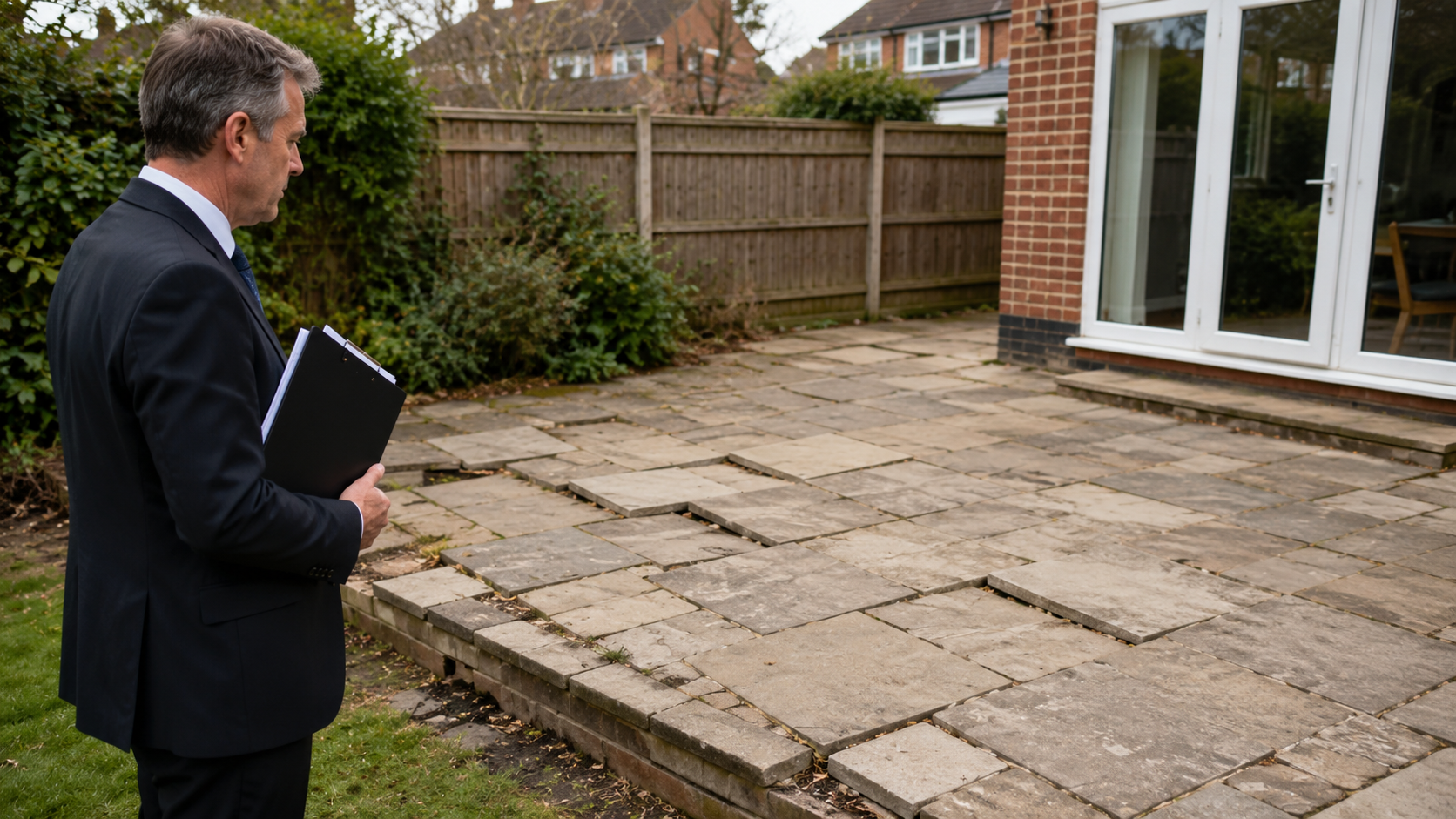
Loose, Moving or Uneven Patio Slabs: Can They Be Repaired or Does the Patio Need Rebuilding
A patio should feel solid underfoot. The paving should remain stable, the joints should stay intact and the finished surface should drain properly. Therefore, when slabs begin to rock, move or become noticeably uneven, it is reasonable for a homeowner to question whether something has gone wrong beneath the surface. Sometimes the problem is genuinely local. One or two paving units may have lost their bond with the bedding mortar, while the surrounding patio remains sound. In that situation, a competent local repair may be perfectly reasonable. However, loose, moving or uneven patio slabs can also be the visible symptoms…
-
My Landscaper’s Work Is Defective: What Should I Do First?
You have paid for a new patio, driveway, deck, retaining wall or complete garden transformation, yet something now feels wrong because the paving moves underfoot, the joints have begun to fail, water collects where it should drain away, the decking feels unstable or parts of the project simply do not look or perform as they should. Most homeowners understandably feel angry, disappointed and confused at this point, particularly when the contractor has stopped responding, dismissed the defects as insignificant or blamed weather, ground movement or poor maintenance rather than the way the work was designed and built. However, the first…
-

When a Garden Project Starts to Go Wrong: Why Early Technical Intervention Matters
When a garden project starts to go wrong, most homeowners initially hope that the contractor will simply put matters right. That response is entirely understandable because landscaping projects rarely progress without minor adjustments, questions or occasional setbacks. However, there is an important difference between a manageable construction issue and a developing pattern of defective work. Early technical intervention can help identify that difference before the project becomes more difficult, expensive and confrontational. A landscape project may involve paving, decking, drainage, retaining structures, lawns, planting, lighting, irrigation and several different ground conditions. Consequently, one defect can affect several connected elements of…
-

Why clear and measured Landscaping evidence matters in garden restoration disputes
High-value landscaping disputes are rarely just about plants, lawns, paving or garden maintenance. More often, they involve a combination of practical site issues, remedial methodology, cost reasoning, aftercare, future allowances and proportionality. That is why measured landscaping evidence matters. The Landscaping Expert recently provided independent landscaping evidence in a reported Upper Tribunal matter involving a historic domestic property, flood defence works and a substantial garden restoration claim. Although the wider case involved several expert disciplines, the garden element required its own specialist assessment. It was not enough to look at the garden as a decorative feature or a general maintenance…
-

Why the right expert matters in landscaping disputes
When a landscaping dispute reaches court, the appointment of the right expert can have a major influence on how the case is understood. That may sound obvious, but in practice the discipline of the expert does not always match the technical issues that need to be considered. It is common for parties, solicitors or the court to think first of a building surveyor or building consultant when a construction-related dispute arises. In many cases, that will be entirely appropriate. Building surveyors provide valuable expertise in relation to buildings, building fabric, structural issues, damp, defects and general construction pathology. However, landscaping…
-

Why mediation can be the sensible route in landscaping disputes
Landscaping disputes can become expensive very quickly. What may start as a concern about paving, drainage, decking, levels, planting, workmanship or unfinished work can soon become a much wider disagreement. Emails become longer. Positions become firmer. Trust breaks down. Before long, both parties may be spending more time arguing about the problem than actually resolving it. That is where mediation can become a sensible route. Mediation is not about ignoring defective work. It is not about forcing one side to give in. It is also not about pretending that a poor installation is acceptable. In a landscaping dispute, mediation works…
-

Why many landscaping disputes should never reach court
Most landscaping disputes do not start in a solicitor’s office. They begin in a garden. A patio may not drain correctly. A deck may move. Plants may fail. Sometimes the workmanship falls below an acceptable standard. On other occasions, the work may be perfectly reasonable, yet expectations differ between the client and contractor. As positions harden, conversations often become more difficult. Emails become longer. Trust begins to disappear. Before long, both parties find themselves discussing legal action. In my experience, many landscaping disputes should never reach court. Understanding the real problem One of the biggest challenges in any dispute is…
-

When a Garden Project Starts to Go Wrong | Independent Landscaping Advice
When a garden project starts going wrong, the signs often appear before the dispute becomes serious. Early independent technical advice can help clarify workmanship, specification, drainage, levels and build quality before further cost is added.
-
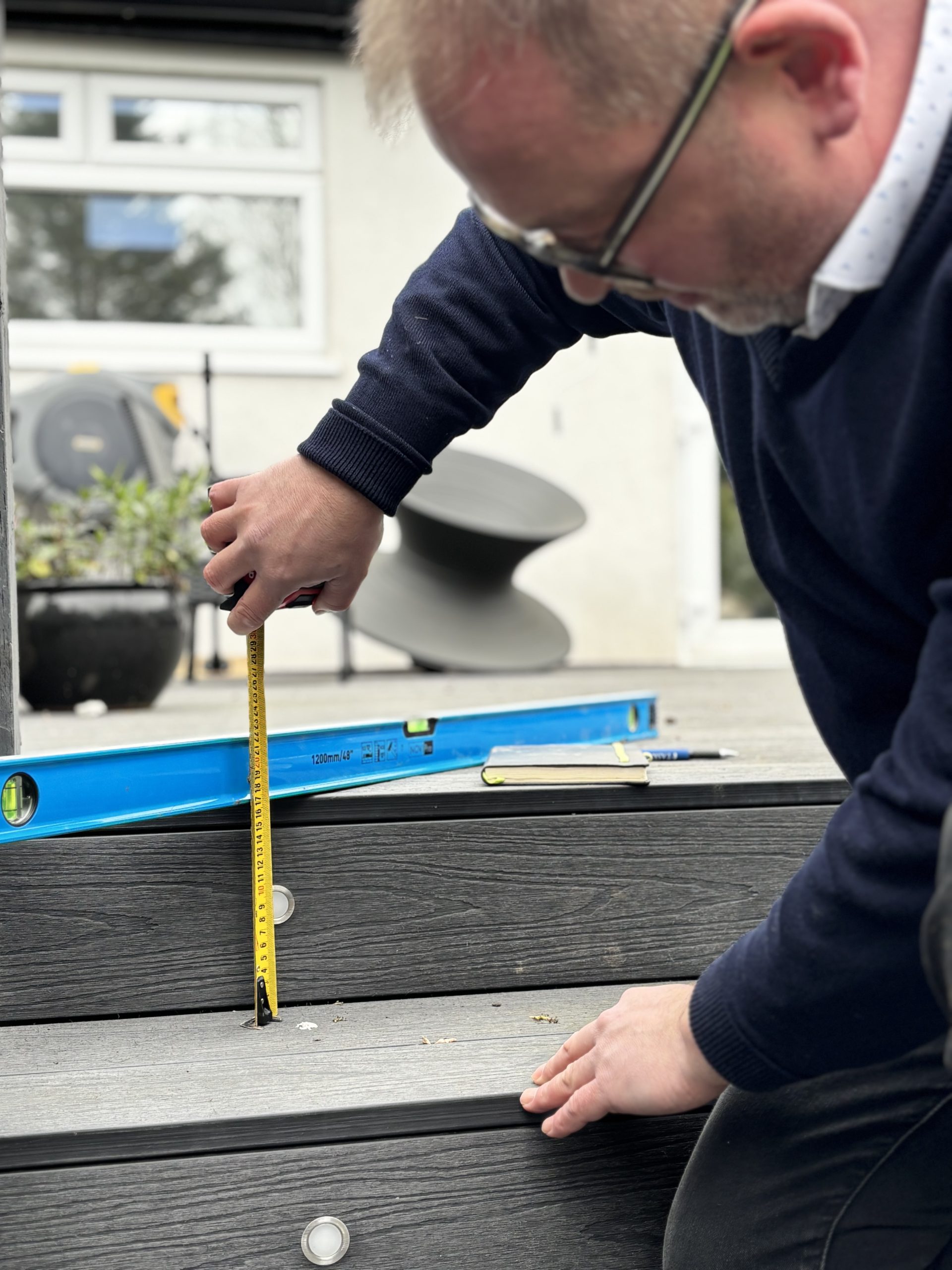
Karl Harrison Expert Witness
Independent technical opinion for landscaping and external works disputes When landscaping work goes wrong, the issues are rarely simple. A dispute may involve workmanship, design, drainage, levels, materials, specification, or build quality. In these situations, clear technical opinion can be crucial from the outset. Karl Harrison is a specialist independent expert witness and landscape consultant working across the UK. He provides evidence-led technical opinion on landscaping and external works disputes. His work helps solicitors, homeowners, and contractors understand the technical position with clarity. He inspects the works, reviews the documents, and assesses the available evidence. He then provides an impartial…

Insights
Speak to an independent landscaping expert today